Newsletter Subscribe
Enter your email address below and subscribe to our newsletter

 ByJohn A
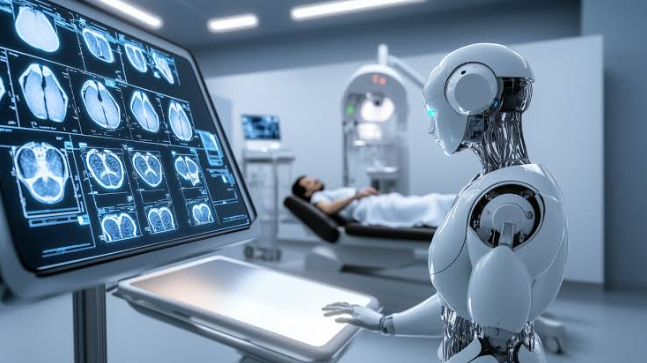
Artificial intelligence augments healthcare diagnostics by speeding pattern recognition, probabilistic reasoning, and multimodal data integration. Across imaging, genomics, and EHRs, AI supports lesion detection, variant prioritization, and longitudinal risk assessment. Robust validation, real-world monitoring, transparency, and patient autonomy are essential safeguards. Success depends on explainability, workflow alignment, and ethical governance, with reproducible evidence guiding clinical impact. The balance of innovation and safeguards invites continued examination of outcomes and implementation challenges.
Artificial intelligence (AI) has become a pivotal tool in healthcare diagnostics, augmenting clinician decision-making through rapid pattern recognition, probabilistic reasoning, and multimodal data integration. This synthesis accelerates detection, risk stratification, and decision support, while demanding ongoing scrutiny of AI bias, data privacy, and algorithm transparency.
Interdisciplinary evaluation ensures reliability, reproducibility, and ethical alignment with clinical workflows and patient autonomy.
workflow disruption, regulatory clarity
See also: quikernews
Key AI tools span imaging, genomics, and electronic health record (EHR) data, enabling integrated diagnostics through pattern recognition, predictive modeling, and data fusion. Across modalities, algorithms support lesion detection, variant prioritization, and longitudinal risk stratification, informing decision-making.
Considerations include data equity, AI ethics, and explainability, guiding model deployment, regulatory pathways, and clinical integration within rigorous, interdisciplinary evaluation and reproducible evidence.
Validation standards demand rigorous, multicenter testing, prospective trials, and real‑world monitoring to confirm generalizability.
Contextual ethics address patient autonomy, data stewardship, and clinician‑AI collaboration, distinguishing safeguards ethics from implementation risk and unintended consequences.
The path forward for AI-driven diagnostics involves aligning adoption strategies with demonstrable gains in diagnostic accuracy, workflow efficiency, and patient-centered outcomes, while maintaining rigorous governance learned from prior safeguards and validation efforts.
The road emphasizes adoption barriers, clinician engagement, and transparent performance metrics to balance innovation with safety, fostering interdisciplinary collaboration and evidence-based evaluation of real-world impact on care delivery and outcomes.
Patient data is anonymized through de-identification, pseudonymization, and privacy-preserving techniques before processing; data privacy is safeguarded by robust governance and auditing of access. Model governance ensures compliance, transparency, and auditable data handling across interdisciplinary teams, supporting freedom with responsibility.
The costs and ROI of AI diagnostics vary by deployment and data strategy, with incremental capital, ongoing maintenance, and regulatory costs; cost benefit analyses often show favorable ROI when adoption barriers—data quality, integration, clinician buy-in—are addressed effectively.
AI cannot fully replace clinicians; it augments diagnosis through decision support. Concurrently, AI ethics, data stewardship, radiology workflows, clinical trials, regulatory compliance, and patient consent shape safe adoption and respect for professional autonomy and patient rights.
Rare case generalization and novelty handling guide AI models, which rely on diverse data and uncertainty estimates; they generalize cautiously, flagging novelties for human review, while iterative validation and interdisciplinary evidence support robust, transparent decision-making.
Training for non-technical staff should cover core concepts, ethical considerations, user safety, and practical tool navigation, aligning with training ethics and clinical workflow while fostering critical evaluation and interdisciplinary collaboration for independent, confident tool usage.
Artificial intelligence accelerates diagnosis with rapid pattern recognition while demanding rigorous validation and vigilant ethics. When multicenter evidence supports accuracy, clinicians gain confidence; yet, opaque models can obscure reasoning and erode trust. Integrated AI—imaging, genomics, and EHR—promises efficiency and longitudinal risk insight, but only through transparent explainability, robust governance, and patient autonomy does it translate into meaningful outcomes. The juxtaposition of speed and scrutiny defines the disciplined path from innovation to reliable patient care.